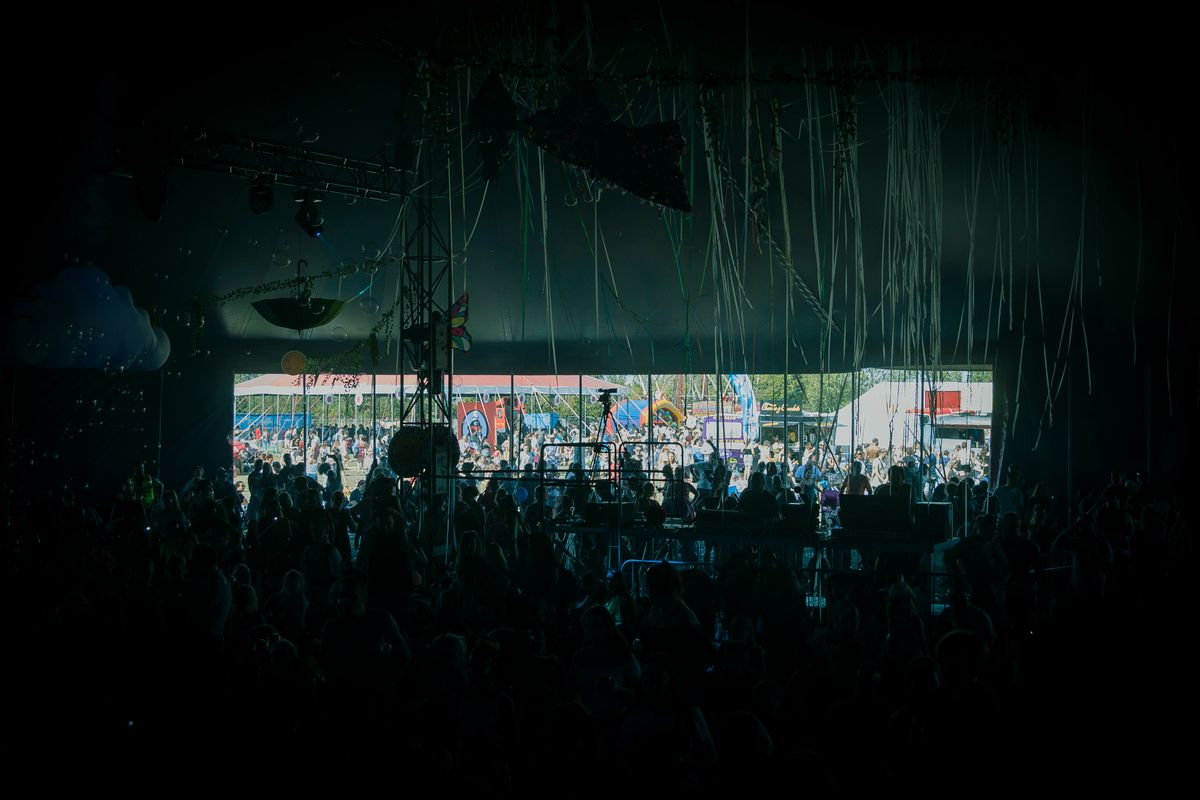
Every July, someone asks us for the definitive list of Chicago summer festivals, and every July we give the same answer: the calendar is not the hard part. The hard part is strategy. Which fests deserve a full day, which are a two-hour drop-in, where to eat so you're not paying festival prices for festival fries, and when to simply stay home. Here's the month-by-month rundown locals actually use, food and drink tactics included.
How locals read the festival calendar
First, a framework. Chicago summer festivals come in three species. The big lakefront productions, like Blues Fest and the Air and Water Show, are free, enormous, and best treated as background radiation: you drift in, catch what you catch, and leave before your feet file a grievance. The ticketed music festivals, Lollapalooza and Riot Fest chief among them, are committed relationships that consume entire weekends. And the neighborhood street fests, dozens of them, are the true Chicago summer: two blocks of closed street, a cover band, a sausage tent, and a suggested donation at the gate.
The local move is to mix all three. One big lakefront weekend, one ticketed splurge if a lineup earns it, and a rotating diet of street fests within walking distance of a good bar. Nobody does everything. The people who try are recognizable by late August: sunburned, broke, and weirdly evangelical about misting fans.
June: the season opener
June is when the city shakes itself awake. The Chicago Blues Festival, the granddaddy of the free lakefront series, takes over Millennium Park early in the month, and it remains one of the best free music events in America: real legends, real fans, and the Pritzker Pavilion lawn at golden hour. Bring a blanket and a picnic; carry-in rules for the park are famously reasonable compared to ticketed fests, though you should check current policies before packing the cooler.
The neighborhoods start firing at the same time. Old Town Art Fair and its scrappier sibling, the Wells Street Art Festival, run the same June weekend, which turns Old Town into one continuous stroll of art booths and beer tents. Andersonville's Midsommarfest brings maypoles and Swedish flags to Clark Street, and it's one of our favorites for food, because the host neighborhood's own restaurants set up sidewalk operations. Pride Fest and the Pride Parade close the month on the North Side with the biggest single-day crowd of the summer; if you go, go early, and treat public transit as the only sane option.
June is also when the season-long fixtures switch on. The Grant Park Music Festival, the free classical series at the Pritzker Pavilion, runs all summer and is the best-kept non-secret in town: world-class orchestra, zero dollars, bring your own picnic. The Millennium Park film series does the same for movies. Neither is a festival in the wristband sense, but locals treat them as the connective tissue between the big weekends, and so should you.
July: street fest peak
July is volume month. Wicker Park Fest brings surprisingly strong indie lineups to Milwaukee Avenue. Square Roots in Lincoln Square is the thinking person's street fest, run with the Old Town School of Folk Music, with a craft beer program that embarrasses larger events. Fiesta del Sol in Pilsen is one of the country's great Latino festivals, and the food, from the tacos to the elotes, is the best eating of the entire festival season. That is not a close call.
Two pieces of July fine print. Taste of Chicago, the city's food fest, has wandered around the calendar in recent years and now anchors later in the season, so don't book a July trip around it without checking the current dates. And Union Park's famous mid-July weekend, home of Pitchfork Music Festival for nearly two decades, has become a question mark; the fest's future has been in flux, so treat that slot as legacy until an announcement says otherwise. Chicago festival history is littered with beloved events that vanished mid-stride. Pour one out and keep moving.
A Chicago street fest is the city's actual town square: a closed street, a suggested donation, a cover band playing "Don't Stop Believin'," and everyone you've ever met.
August: the heavyweights
August opens with Lollapalooza swallowing Grant Park whole for four days. Locals are divided into three camps: those attending, those fleeing, and those who've learned to enjoy the free acoustics from a nearby rooftop. If you're in the first camp, food planning matters more than at any other event of the summer, and we've written a full playbook in our Lollapalooza eat and drink guide, covering everything from pre-gate breakfast to post-encore late night.
Mid-August brings the Air and Water Show, the free lakefront spectacle where fighter jets rattle windows from Uptown to the South Loop for a weekend. North Avenue Beach is ground zero and a zoo; locals watch from quieter beaches farther north or from any tall building with a friendly rooftop. Northalsted Market Days, the massive street fair in Boystown, packs Halsted with music and vendors the same month, and the Bud Billiken Parade, a South Side institution since 1929, closes the summer's parade season with one of the oldest and largest African American parades in the country.
September: the long goodbye
Festival season doesn't end on Labor Day; it just puts on a flannel. Riot Fest in Douglass Park is the September anchor, a three-day punk and alternative carnival complete with actual carnival rides, and it has quietly become one of the best-run music festivals in the city. The crowd skews local and the nostalgia-heavy lineups are engineered to make elder millennials feel things. Taste of Chicago's current incarnation also lands in this stretch, smaller than its bloated 1990s self but better for it. The World Music Festival scatters free international acts across venues citywide, and the street fests take their final bows before the awnings come down.
Then it ends, all at once, the way Chicago seasons do. For the record, winter offers exactly one festival worth the name, and we love it without irony: the German Christmas market downtown, fully documented in our Christkindlmarket guide. Bookmark it for when the awnings come down.
The ones locals quietly gatekeep
Beyond the marquee names, a second tier of events inspires real devotion, and locals mention them the way you'd share a fishing spot. Printers Row Lit Fest turns the old bookbinding district into an open-air book market for a June weekend, and it pairs beautifully with a long lunch nearby. Chicago SummerDance sets up a dance floor in Grant Park through the warm months, with live bands and free lessons; watching strangers learn to salsa at dusk with the skyline behind them is the most romantic free show in the city. The Chosen Few Picnic in July is a South Side house-music institution, part festival and part family reunion, and a pillar of the culture Chicago invented. And the Chicago Jazz Festival closes the free lakefront season over Labor Day weekend in Millennium Park, which means the summer both opens and closes with the blues' extended family. None of these will fight you for tickets. All of them will make you feel like you live here.
Food and drink strategy that actually works
Festival food in Chicago runs from transcendent to extortionate, sometimes at adjacent tents. Some rules we've paid dearly to learn:
- Eat a real meal before any ticketed festival. Inside, you'll pay a premium for a smaller portion of something a nearby restaurant does better.
- At street fests, the inverse applies: the food is often from the neighborhood's own restaurants, so the fest booth can be the cheap way to sample a place with a long dinner wait.
- Follow the longest line of locals, not the biggest sign. At Fiesta del Sol, the line wrapped around a tamale cart knows something.
- Cash still rules at smaller fests. Card readers die in direct sunlight at a statistically improbable rate.
- Hydrate on a schedule, not on thirst. One water per beer is the veteran ratio, and the beer tents will still be there after the water line.
The drinking corollary: festival beer is a social lubricant, not a destination. The wristband-and-tokens system at most street fests guarantees a warm domestic in a plastic cup. Enjoy one, then adjourn to a proper neighborhood bar when the band takes a break. Every good street fest is within a block of a better tap list.
Gate etiquette and the suggested donation
A recurring visitor question: is the donation at a street fest gate mandatory? Legally, on a public street, no. Practically, these fests fund neighborhood chambers of commerce, local schools, and the very existence of next year's fest, so pay the suggestion if you can. The volunteers shaking donation buckets have perfected a specific Midwestern stare, part guilt, part sunburn, and you don't want it aimed at you. Consider it the cheapest cover charge in entertainment, and remember you're getting live music, people-watching, and someone's grandmother's tamales for the price of two coffees.
Weather, heat, and the lake effect
Chicago summer weather is a coin flip weighted by malice. The lakefront can run ten degrees cooler than the neighborhoods, which is delightful at Blues Fest and hypothermic at a September night show. July heat waves turn asphalt street fests into griddles; shade is the scarcest resource at any daytime event, so scout it on arrival like you would an exit row. Storms roll in fast off the plains, and the big fests will evacuate for lightning, so check the radar before heading out and never trust a cloudless morning.
The veteran packing list, refined over many sunburns: sunscreen you'll actually reapply, a hat you're not embarrassed by, a portable phone charger, a small stash of cash, and a light layer for the lakefront evening drop, which arrives every single time and surprises people every single time. Closed shoes over sandals at any event with a crowd; your feet will be stepped on, and the only question is how much that matters. Leave anything you'd mourn at home.
When a fest does rain out, we recommend the veteran's consolation ritual: duck into a noodle shop and let the storm pass over a hot bowl. Our tour of the best ramen in Chicago exists partly for exactly these afternoons, because nothing repairs a soggy festival day like broth and air conditioning.
The one-day sampler, if you must
Visiting for a single summer weekend and want the full festival experience without a wristband? Here's our house recipe. Saturday morning at a farmers market, because those count as festivals in our book. An afternoon street fest in whatever neighborhood is hosting; there is always one, sometimes four. Dinner at a real restaurant, because you took our advice above. Then the lakefront at dusk, where on many summer nights the sky over Navy Pier does its fireworks thing and the skyline performs for free. That's the whole religion of a Chicago summer in one day, no lineup required. And if the fireworks pull you onto the pier itself, our guide to eating at Navy Pier sorts the worthwhile from the tourist-priced before you commit to a table.
FAQ: Chicago summer festivals
What is the biggest summer festival in Chicago?
By sheer scale, Lollapalooza, which takes over Grant Park for four days at the start of August with hundreds of thousands of attendees across the weekend. Among free events, the Air and Water Show and the Blues Festival draw the largest lakefront crowds. But ask a local their favorite and you'll more likely hear a neighborhood name: Fiesta del Sol, Midsommarfest, Square Roots.
Are Chicago street festivals free to attend?
Most neighborhood street fests operate on a suggested donation at the gate rather than a hard ticket, since they take place on public streets. The donation funds local organizations and next year's festival, so paying it is good citizenship. Big lakefront events like Blues Fest are genuinely free; Lollapalooza and Riot Fest are fully ticketed.
When is festival season in Chicago?
Roughly June through September. June opens with Blues Fest and the first street fests, July is peak neighborhood-festival volume, August brings the heavyweights, and September winds down with Riot Fest and the final street fairs. Dates shift year to year and some events have moved or paused recently, so confirm current schedules before planning a trip around any single fest.